
When Did "Boundaries" Become "Goodbye Forever"?
I often go back and think about my caregiving season with both of my parents. The sacrifices, and long days, filled with quiet moments of doubt. I wonder sometimes: was it worth it? I'll come back to that answer.
But first, I need to address something I've been sitting with for a while. There's a growing trend where people are opting out of relationships with their parents or family members entirely, what many call "going no contact." And I'll be honest with you: I can't say I fully agree with it.
Before you fire off a strongly-worded email, hear me out. This is not a dismissal of anyone's pain. I know that some people have walked through genuinely devastating seasons at the hands of the very people who were supposed to love them. That is real, and I don't take it lightly. This is simply my perspective, shaped by my own experiences and the decisions I've had to make along the way.
My parents were not perfect people.
Not even close. But they were two people doing their very best under the weight of circumstances that would have broken many of us.
My mother was physically and verbally abused by her own father. And then, as if following a painful script she never chose, she found herself in relationship after relationship where abuse was the common thread. By the time she became a mother, my mother, she parented from a place of fear. That fear often looked like control, and like authority. But underneath it, she was trying to protect me from the same evils she had survived. In her heart, that was love.
Then there's my father, who lost his mother when he was just two years old. He grew up without that foundational warmth, carrying a quiet sense of being unwanted and rejected. Now put these two people together, and you don't exactly get a fairy tale. What you get are two survivors, whose lives were painted in colors that stained every lens through which they saw the world.
Yet they did the best they could, and I admire them for that. Because if I had chosen to see only the negative, I would have missed everything in them that was worth holding onto.
Did I go through seasons of anger? Absolutely. Did I blame them for some of my outcomes? Of course I did. But here's the thing, those were still my outcomes, born from my decisions. Blaming them was always easier than owning my part. Grace has a way of requiring something from us too.
I remember when tough love was just life.
Family was family, messy, loud, very loud, sometimes bruising, but you showed up. You fought together, laughed together, and found your way back to each other. The idea of cutting off family completely would have been unthinkable. Because even a dysfunctional family shapes you. For better and for worse, it shapes you.
And that brings me to the word I keep coming back to: grace.
I've had to ask myself hard questions about grace. Because it's easy to want it and much harder to give it. We are quick to ask for it for ourselves. We expect the people who love us to extend it generously. But somewhere along the way, offering it to others, especially to our parents with all their wounds and failures, has become something people aren't sure they owe anymore.
I think about my own children when I sit with this. I know I have not always been the best version of myself. Neither have they. But we extended grace in those seasons because love requires it, and I hope, with everything in me, that they would always do the same for me.
There is also something deeply spiritual in this for me. Scripture instructs us to honor our mothers and fathers. I believe in boundaries, real ones, healthy ones. But you can hold a boundary and still hold honor. The two are not mutually exclusive.
So here is the question I keep coming back to.
Why aren't we talking more about conflict resolution? Why, when relationships get hard, does disconnection get handed to us as the answer before we've even tried to work through it?
I wonder if part of what's driving the no-contact movement isn't just unresolved pain. I wonder if it's that no one ever taught us how to navigate conflict in the first place. And when we don't have those tools, we reach for distance. And distance, over time, can become permanent.
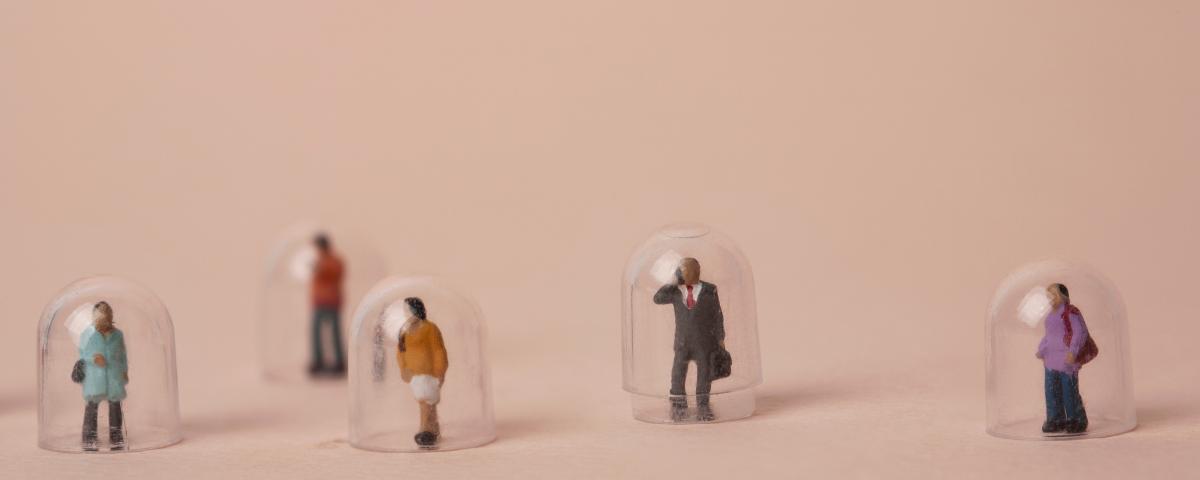
Look at what's happening around us. We are seeing a rise in gun violence. A rise in isolation and disconnect. Relationships, families, communities, entire generations, fracturing at the seams. It feels like a disease, infectious, and if left untreated, its end result is the slow destruction of the very relationships and unity we were designed to have.
What grieves me most is this: I believe we are fighting the wrong enemy.
I wonder if sometimes the real battle isn't with the people who hurt us, but with the unresolved pain that never got a name or a place to go. So instead of facing it, we flee from it. We cut it off, and we wonder why it doesn't feel like healing.
Because shutting the door on the thing that hurt you doesn't make it disappear. It shows up somewhere else, in your next relationship, in your parenting, in the walls around your heart that keep getting thicker. Silence doesn't heal wounds, it just relocates them. What if there was a better way?
The numbers tell a story we can't ignore.
A 2025 YouGov poll found that nearly 4 in 10 Americans no longer have a relationship with one or more immediate family members. And the trend is sharpest among the youngest generation, with 60% of Gen Z reporting they have gone no contact, compared to just 20% of baby boomers. Knowable MagazineThe Week
So the question worth sitting with is: why? Because the pain is real, but I don't think pain alone explains all of it.
Part of it is cultural. We live in a world that has quietly sold us the idea that difficulty has no place in our lives. We have one-click everything. We cancel subscriptions, unfollow accounts, and mute people with a tap. Then slowly, without realizing it, we have started applying that same logic to relationships. If it's hard, opt out. If it hurts, leave. If it costs you something, you deserve better. That mindset erodes the very things healthy relationships require: resilience, perseverance, and a willingness to do the work even when it's uncomfortable. Patience, forgiveness, and compassion are not soft suggestions. They are the load-bearing walls of any lasting connection. Indrosphere
Part of it is also something deeper. I once heard someone say that so many of our relational problems trace back to one belief: that people are basically good. And if I am basically good, then I don't feel the urgency to grow or change. The problem is always the other person. And if the problem is always the other person, removing them feels like the solution. It is a lens worth considering. Because when we stop asking "what is my part in this," we stop growing. And growth requires us to push through resistance, not walk away from it.
This is why the FACE Model matters.
It is a framework we use at Family Bridges with couples, young adults, and even children to help identify conflict and actually work through it. You can learn more about that work at familybridgesusa.org. Conflict resolution is a skill, and like any skill, it has to be learned, practiced, and passed down. The FACE Model gives people language for the moments when emotion takes over and words fail.
So what does FACE actually mean?
F is for Feelings. What am I actually feeling, and why do I feel this way? Most of us have never been taught to slow down long enough to honestly answer that. We react before we reflect. But when you can name what you're feeling and trace it back to its root, you stop being controlled by it. You start to see it clearly.
A is for Assumptions. This is where it gets real. Every one of us has a story we've been telling ourselves, sometimes for years, sometimes for decades. A script on repeat that feeds the feelings. Maybe it's "I will never be good enough for them." Maybe it's "they never really loved me." Those assumptions quietly shape how we interpret every interaction, every silence, every tone of voice. Until we examine the story, we keep living inside it as if it were fact.
C is for Comeback. This is the mirror nobody wants to look into. How are the people around you responding to the way you are showing up? Is your sarcasm creating distance? Is your silence pushing people away? The comeback isn't about blame. It's about honest self-awareness, because sometimes what frustrates us most in our relationships is a direct reflection of how we've been responding to our own unresolved pain.
E is for Effect. Unresolved conflict doesn't just live in your relationships. It lives in your body, your habits, your coping. It shows up as addiction, binge watching, sulking, overeating, isolation, or an anger that seems out of proportion. The effect is the evidence that something underneath needs attention. And once you can see it for what it is, you can begin to make a different choice.
The FACE Model doesn't promise that every relationship can be fully restored. But it does offer something most of us were never given: a way to understand ourselves more honestly so that we can show up in our relationships more intentionally. That is where healing actually starts, not in the cutting off, but in the facing.
We have to push past the hard stuff in families.
We have to speak. We have to cry. We have to sit in the discomfort and face it together. Because the alternative isn't peace. The alternative is a slow hardening of the heart that isolates us from the very people we were meant to do life with.
Family, even in its most broken form, was designed for connection. For resilience, and the kind of love that fights for each other instead of away from each other.
The conversation worth having isn't about whether your pain is valid. It is. The conversation worth having is about what we do with it. It starts with refusing to let unresolved conflict have the last word.
And to answer my earlier question: was the caregiving season worth it?
Every single day of it.