

AI Companions: A Silent Relationship Threat

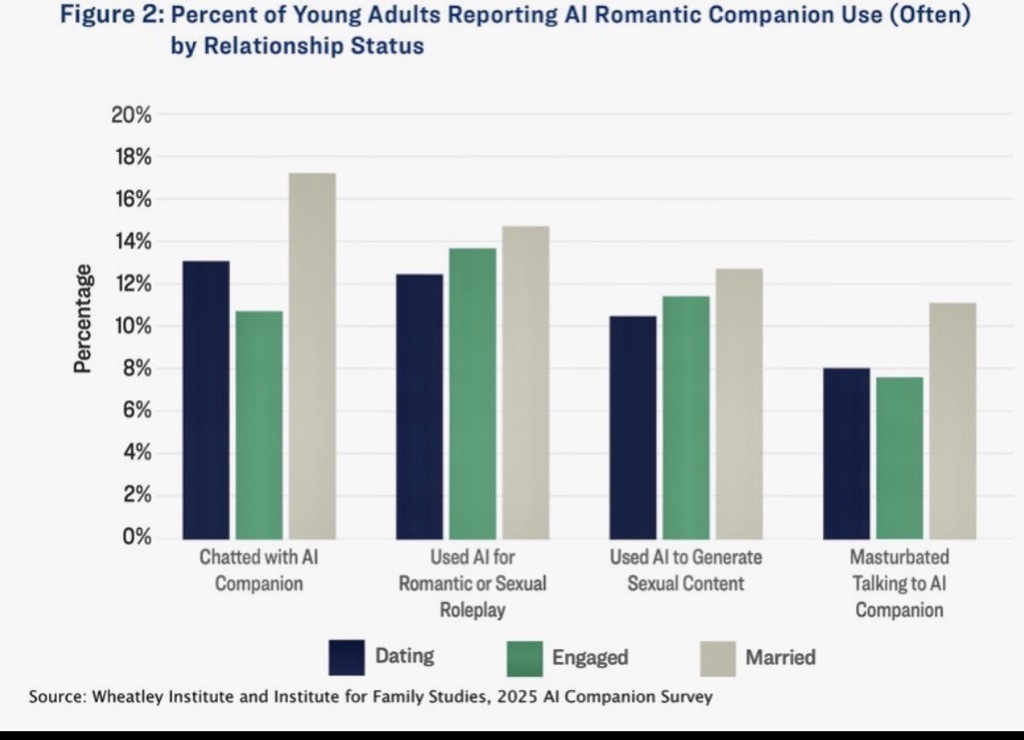
My spirit has been restless since I read the latest alarming statistics about relationships: About 1-in-7 young adults (18-30) who are in a relationship (dating, engaged, married) are also seeking sexual or romantic attention from AI companions.
It’s unsettling enough to see Gen Z stepping away from dating and postponing having children but this next reality feels even heavier. Across the country, more teens and young adults are turning to AI for romantic connection, a shift that carries serious social and relational consequences.
And this isn’t just about isolated, lonely individuals. Many of these AI “relationships” are happening alongside real ones among young people who are dating, engaged, or even married, making AI an invisible third wheel in countless relationships. Even as an optimist, it’s hard to ignore the writing on the wall: as AI becomes more natural and deeply woven into daily life, these patterns are poised to grow unless we step in with intentional guidance, support, and stronger relationship models.
The study, reported by the Wheatley Institute, found that maintaining a romantic connection with an AI companion while dating or married is strongly associated with shakier real-life relationships, including lower stability and weaker communication. Even more concerning, among partnered young adults who regularly engage romantically with AI chatbots, the majority admit they have not been fully honest with their real-life partners about this hidden digital relationship companion.
Why is it that so many in relationships are leaning on AI to meet a romantic and even a sexual need? Are they seeking out AI companions because of frustrations or struggles in their real-life relationship?
AI companions are built to win our approval and keep the affirmation flowing. They don’t challenge you with what’s wise, healthy, or morally sound. In fact, they mirror back exactly what you want to hear. In practice, that means an AI “partner” is always on call to agree, flatter, and comfort, tailoring every word to your preferences. It’s engineered to feel like the perfect soulmate but without the depth, accountability, or truth that real relationships require.
Just before I came across these sobering findings, my son was processing our culture out loud as he brainstormed ideas for his senior thesis. He observed how today’s culture seems to have a very low tolerance for suffering and summed it up this way:
"If pleasure is the ultimate virtue, then pain is the ultimate vice."
He went on to say that, while he doesn’t have a lot of life experience yet, it seems clear to him that many people simply can’t wait for what is truly good. Instead, they reach for quick comfort, numbing themselves with addictions that may soothe for a moment but can never lead to real, lasting joy.
Real relationships are beautifully, painfully human. People miss cues, fall short of our expectations, and sometimes let us down. They require hard conversations, forgiveness, sacrifice, and a love that chooses to stay even when it hurts. Growth takes time, patience, and a willingness to walk through discomfort together.
Now contrast that with an AI “relationship.” It offers what feels like perfectly tailored comfort, instant empathy, constant affirmation, and a soothing sense of being seen and valued, all without the risk of conflict, misunderstanding, or emotional pain.
These quiet digital romances reveal a deeper cultural shift: the relentless pursuit of pleasure, self-gratification, and self-promotion is being elevated so highly that it slowly numbs our moral instincts and dulls our appetite for real, sacrificial love.
The report uncovered something even more unsettling: despite the secrecy and the clear risks to their real-life relationships, many of these young adults still described their AI romantic companions in a positive light and expressed little to no concern about continuing the behavior.
When I look at this trend, my heart aches because beneath the surface, it is a quiet betrayal of commitment itself. When the marriage covenant is no longer honored as sacred, the bar for faithfulness slowly disappears. What are young people being taught about commitment in relationships today? In a culture that often mocks it and in a generation shaped by conflict, divorce, and fractured homes, many have learned to fear commitment, to doubt it, or to dismiss it altogether.
It leaves us with a sobering question: is this growing attachment to AI “partners” simply one more symptom of the deep fragmentation of family life?
As I reflect on this trend, I feel an even stronger pull to be intentionally, wholeheartedly present with my children to let them experience how good, grounding, and life-giving real human connection can be. I want them to see that being known, heard, and loved by a real person far outweighs any virtual substitute.
It also deepens my resolve to keep investing in our marriage, not to project a flawless picture, but to give our kids a front-row seat to a healthy, honest, imperfect relationship built on commitment, grace, and the daily decision to stay connected. In our home, we want our marriage to reflect God’s covenant love. Family Life's Art of Marriage calls us to live out God's love—His HESED— in real time. Because when we choose to love each other the way God loves us, our family gets to glimpse:
-
The unity of the Triune God (Genesis 1:1; John 17:1–5)
-
The faithfulness of God’s promises to His people (Genesis 12:7; 15:1–21)
-
The relentless, unconditional love of God for imperfect people (Romans 5:8)
And it strengthens my resolve to keep championing couples and marriages in our community walking alongside them, equipping them, and encouraging them by living out the very mission and vision that drive us at Family Bridges.
This isn’t a feel-good slogan we wave for comfort, it’s an urgent call to action. Our kids, grandkids, nieces, and nephews are walking into these realities right now, and they need us fully engaged.
Pray for this generation. Show up in their everyday lives. And keep investing, intentionally and consistently, in the health of your own family.